
Only 6 client spots available as we prioritize service quality.
Australia’s Construction Collapse: Why Builders Keep Going Bust (and What It Means for Your Business)

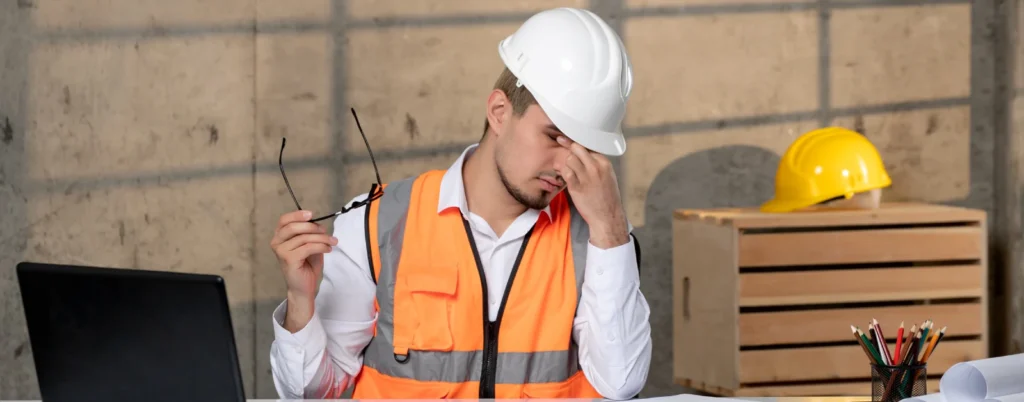
More than 5,000 Australian construction companies have collapsed since mid-2023. This is not a cyclical blip — it is a structural unravelling with real consequences for developers, investors, subcontractors, and any business connected to the built environment.
5,000+
Construction collapses since mid-2023
27%
Of all company insolvencies in Australia
+42%
Year-on-year surge in 2023
3,217
Firms collapsed in 2024 alone
When a construction company collapses, it rarely makes headlines unless the brand name is large enough. But behind every quiet liquidation, there are unpaid subcontractors, stalled sites, stranded investors, and developers scrambling to find replacement builders at a cost they never budgeted for.
Australia’s construction sector is now the single largest source of business failures in the country — accounting for roughly 26–27% of all company insolvencies recorded in 2023–2024. That figure alone should stop any business owner, developer, or investor connected to this industry and prompt a hard question: am I exposed?
This article breaks down exactly why builders keep going under, who carries the downstream risk, and — critically — what strategic steps you can take to protect your business before the next wave of collapses hits.
Key Insight
Construction insolvencies are not merely a builder problem. They are a counterparty risk problem, a contract design problem, and increasingly, a business survival problem for anyone working in or around Australia’s built environment.
The Scale of the Crisis: Numbers That Demand Attention
The data tells a story that is both alarming and underreported. In 2022, 1,793 construction firms entered external administration — already a warning sign. By 2023, that number had jumped to 2,546 firms, a 42% year-on-year increase. In 2024, 3,217 construction companies collapsed — another 26% rise. ASIC construction insolvency data for FY2023–24 recorded approximately 2,975 construction insolvencies, representing more than one-in-four of every company failure across all industries in Australia.
The 12 months to March 2025 added another 2,636 insolvencies — and analysts tracking ASIC filings estimate that nearly 4,900 construction insolvency filings FY2024–25 were recorded, with a further 744 already counted by mid‑FY2025–26. This is not a crisis finding its floor. It is a crisis becoming the new normal.
The real impact of these numbers lies in the volume‑builder and commercial collapses, which span both residential and commercial construction — not just small operators. High-profile collapses involving entities at the scale of Porter Davis have demonstrated that balance-sheet size does not insulate a firm from structural contract risk.
Root Causes: The Five Forces Driving Builder Failures
The collapse of Australia’s construction sector is not the result of a single shock. It is the product of multiple compounding forces that were set in motion during the pandemic boom and are still working their way through project pipelines today.
1. Fixed-Price Contracts and the Margin Trap
During the 2020–2022 construction boom, builders competed aggressively for work — often underpricing risk and stripping contingencies from tenders just to win jobs. Many signed fixed-price contracts at a time when materials and labour were comparatively cheaper and demand was buoyant.
What followed was a margin catastrophe. As material costs surged and labour became scarce, builders found themselves contractually bound to deliver projects at prices that no longer reflected reality. With no escalation clauses and little leverage to renegotiate, many firms were effectively delivering work at a loss on every job while their cash reserves drained away.
Key Insight
Fixed-price contracts without escalation clauses became liability traps the moment external costs moved beyond forecast. Firms that signed the most work during the boom often suffered the most when costs blew out.
2. The Input Cost Surge
Pre-contract budgets were frequently based on 2019–2020 pricing benchmarks, but many projects extended deep into 2023–2025 — a period when construction input costs had risen sharply due to supply-chain disruptions, elevated freight rates, and energy-related price increases. Skilled labour shortages in counstruction compounded the problem by pushing wages up and forcing builders to absorb overtime premiums and recruitment costs that were never factored into original tenders.
For builders without hedging strategies or procurement discipline, the result was a recurring pattern: “cost-to-complete” surprises discovered mid-project, far too late to renegotiate terms or exit gracefully.
3. Cash Flow Dysfunction and Payment Culture
Construction is cash-flow intensive by nature, but the sector’s payment culture has made it structurally fragile. Late progress payments, disputed claims, and financier-driven hold-backs mean that contractors routinely finance labour, materials, and subcontractors from their own balance sheets — often for months at a time.
When multiple projects are simultaneously delayed or disputed, cash-flow gaps compound quickly. Firms move from overdraft to emergency financing to insolvency in a pattern that often takes 12–18 months to fully crystallise. ASIC data show that creditors’ voluntary liquidations dominate the collapse statistics — indicating prolonged, painful distress rather than sudden failure.
4. Supply Chain Disruption and Schedule Compression
Extended lead times for engineered timber, steel, and specialty fixtures delayed project starts and milestone completions, triggering delay-cost penalties and client disputes. Late deliveries compressed active work windows, increasing overtime, re-sequencing costs, and rework — all of which eroded margins on projects that were already thin.
Many builders signed contracts assuming standard lead times and availability. What they encountered instead was a procurement environment that bore almost no resemblance to the one they had budgeted for.
5. Rising Interest Rates and Financing Constraints
The post-pandemic tightening cycle raised borrowing costs for both developers and builders. Firms with asset-backed or project-finance exposure saw debt-service costs rise even as project revenues remained fixed. Developers found it harder to refinance or extend project loans, creating a cascading effect that reached all the way down to subcontractors waiting to be paid.
Higher interest rates also dampened housing demand, slowing new sales and tightening the liquidity that developers needed to fund ongoing construction. The result was a sector experiencing revenue pressure from the market and cost pressure from every direction simultaneously.
The Builder Collapse Pattern: How It Unfolds in Four Stages
Builder failures rarely happen overnight. They follow a recognisable deterioration pattern — one that, with the right visibility, offers early warning signals for every business in the supply chain.
1. Contract Overload and Margin Compression
Builders sign multiple fixed-price jobs during the boom with thin or negative risk buffers. Early signs include tight project margins, even as total revenue grows — a misleading picture of health.
2. Cash-Flow Strain and Stretched Creditors
Progress payments slow or are withheld. Builders accumulate trade debt with suppliers and subcontractors, stretching payment terms beyond agreed limits. Working-capital buffers begin to erode.
3. Surety and Banking Pressure
Banks and sureties tighten guarantees and bonding limits, restricting access to new work. Some builders resort to using incoming cash from new contracts to fund losses on existing ones — a fragile, unsustainable arrangement.
4. Formal Insolvency Trigger
A single large job blows out, a key client refuses a variation claim, or a financier withdraws. The chain-reaction failure follows: subcontractors unpaid, sites stalled, creditors chasing diminished assets.
For any business working with builders, this pattern offers something genuinely valuable: early warning indicators. Extended payment terms, frequent disputes, and an unusual reliance on new-job revenue are all signals that warrant closer scrutiny — before the formal notice arrives.
Who Carries the Risk? A Stakeholder-by-Stakeholder Breakdown
The consequences of a builder collapse do not stay within the building company. They radiate outward across an entire project ecosystem. Understanding where your business sits in that ecosystem — and what risks it carries — is the starting point for any serious risk management strategy.
Small Builders
Small construction firms have less financial resilience, weaker risk-management systems, and thinner margins. They rely on short-term trade credit and informal financing that evaporates quickly under stress. They are the most likely to disappear quickly — and to do so without warning.
Large and Volume Builders
Scale provides a buffer, not immunity. High-profile collapses have demonstrated that large volume-builders can accumulate enough fixed-price, margin-negative exposure to overwhelm even a strong balance sheet. Their failures create systemic supply-chain shocks and off-the-plan completion crises that affect hundreds or thousands of buyers simultaneously.
Subcontractors and Suppliers
Subcontractors
Paid last. When a head contractor collapses, subcontractors face unpaid invoices for work completed, equipment stranded on site, and no meaningful recourse beyond unsecured creditor status in a liquidation.
Suppliers
Receivables write-offs become unavoidable. Suppliers who tighten credit terms in response inadvertently squeeze cash-strapped builders further, accelerating the very failures they are trying to protect against.
Property Developers
Developers rely on on-time, on-budget delivery to meet financing covenants and sales agreements. A builder failure mid-project introduces completion risk — the need to appoint a replacement builder, almost always at higher cost — and funding risk, as lenders may demand additional equity or tighten loan covenants when project progress stalls.
Investors and Owner-Occupiers
Off-the-plan buyers and property investors can find themselves holding contracts for incomplete projects, with completion guarantees or insurance cover that falls short of actual replacement cost. In some cases, the gap between what insurance covers and what completion actually costs runs into tens of thousands of dollars.
Business Impact: Beyond the Headline Collapse
The financial exposure from a builder failure extends well beyond the immediate loss of an unpaid invoice or a delayed project. The ripple effects are slower-moving and, for that reason, often more damaging to business performance over time.
- Receivables write-offs: Upstream suppliers and downstream investors face ASIC-level sector-wide write-offs that erode margins across entire business units.
- Project delays of months: Replacing a failed builder typically takes months, during which sites stall, financing costs accumulate, and market conditions can shift against the developer or investor.
- Contract liability exposure: Businesses locked into fixed-price agreements without escalation clauses, robust variation procedures, or force-majeure buffers face compounding losses with limited legal remedies.
- Supply chain constriction: When a builder fails owing money to multiple subcontractors and suppliers, those businesses reduce their capacity to take on new work — constraining labour and material availability across projects that are otherwise financially sound.
Risk Mitigation: What Smart Businesses Are Doing Differently
The businesses navigating this environment without major losses are not necessarily luckier than their peers. They have made deliberate structural choices — in contracts, in due diligence, and in how they monitor counterparty risk. Here is what that looks like in practice.
Rebuild Your Contracts From the Risk Up
- Negotiate escalation and indexation clauses for materials and labour into any contract spanning more than six months.
- Demand clear variation procedures and cost-pass-through mechanisms that do not require legal action to enforce.
- Insist on performance bonds, parent-company guarantees, and retention security arrangements as standard, not as exceptional requests.
- Include staged termination rights that allow you to exit cleanly if a contractor’s financial position deteriorates materially.
Make Financial Due Diligence Non-Negotiable
- Review the balance-sheet health, insolvency history, and completed-project track record of any builder before appointment — not after.
- Verify that completion guarantees, insurance policies, and bond coverage actually match the risk profile of your project.
- Use third-party risk-monitoring tools and periodic insolvency-risk screening of key contractors throughout the project lifecycle, not just at appointment.
Know the Early Warning Signals
For subcontractors and suppliers, the following patterns are reliable indicators of a builder in distress — and a prompt to reassess your exposure:
- Payment terms suddenly stretched beyond agreed limits — especially if the delay is accompanied by vague explanations.
- Unusual frequency of variation disputes — builders under pressure often contest variations to defer costs.
- Visible turnover in senior finance or commercial staff — a sign of internal instability.
- Rapid expansion of contract pipeline without obvious financing — potentially a “new-job cash” strategy to fund old-job losses.
- Reluctance to provide updated financial statements when asked — a red flag in any counterparty relationship.
Build Cash-Flow Resilience Into Your Own Business
Running cash-flow forecasts and scenario models — including stress tests for “what if my largest builder customer fails?” — is no longer optional financial management. It is basic risk hygiene for any business with significant construction-sector exposure. Firms that have survived this cycle have typically maintained working-capital buffers sufficient to absorb 60–90 days of receivables disruption without entering distress themselves.
What Comes Next: The 2026 and Beyond Outlook
The acute phase of insolvency surges may be easing at the margins — but the structural conditions that created this crisis have not been resolved. Fixed-price contract models, dysfunctional payment culture, and thin margin disciplines remain deeply embedded in how Australian construction is procured and delivered.
Industry analysts expect continued consolidation in the sector, with stronger players acquiring distressed work-in-progress and absorbing subcontractor capacity that was previously tied up with failing builders. Government and industry bodies are examining construction‑specific regulatory reforms — including construction payment‑system reforms, stronger warranty regimes, and enhanced builder‑licensing requirements — but implementation timelines remain uncertain.
The leading firms are already adapting. Shifting to more flexible contracts, risk-based pricing, and tighter project-portfolio controls — rather than competing purely on price — is emerging as the sustainable differentiator for mid-sized contractors that have survived the current cycle. Digital-enabled project controls, real-time cost tracking, and variation-management systems are moving from competitive advantage to operational necessity.
Key Insight
The construction companies most likely to survive the next cycle are not those with the most projects on their books. They are those with the strongest commercial disciplines, the most rigorous contract risk management, and the financial transparency to identify problems early.
Frequently Asked Questions
Why are so many construction companies going bankrupt in Australia?
The primary causes are fixed-price contracts signed during the 2020–2022 boom that became loss-making as material and labour costs surged. Combined with dysfunctional payment practices, thin working-capital buffers, and rising interest rates, many builders have been delivering projects at or below cost while their cash reserves erode — a pattern that eventually ends in formal insolvency.
How many Australian construction companies have collapsed?
Over 5,000 construction companies entered insolvency or external administration between mid-2023 and early 2025. In 2024 alone, 3,217 construction firms collapsed — a 26% year-on-year increase. ASIC data show the construction sector accounts for approximately 27% of all company insolvencies in Australia.
What are the warning signs that your builder might be in financial trouble?
Key indicators include: payment terms being stretched beyond agreed limits, unusually frequent variation disputes, high staff turnover in finance or commercial roles, rapid pipeline expansion without visible financing, and reluctance to share updated financial statements. Any combination of these signals warrants immediate due diligence.
What happens to subcontractors when a head contractor goes into liquidation?
Subcontractors typically become unsecured creditors in the liquidation process — meaning they are paid last, if at all, from whatever assets remain. They may face unpaid invoices, equipment stranded on site, and limited legal recourse. In practice, recovery rates for unsecured creditors in construction liquidations are low.
How can property developers protect themselves from builder insolvency?
Developers should conduct thorough financial due diligence on builders before appointment, insist on performance bonds and completion guarantees that genuinely match project risk, include staged termination rights in contracts, and monitor builder financial health throughout the project — not just at the start. Escalation clauses and clear variation procedures also reduce the risk of a builder becoming financially distressed mid-project.
Are large construction companies safer than small ones?
Not necessarily. While large builders typically have stronger balance sheets and greater access to finance, high-profile collapses have demonstrated that scale alone does not protect against systemic fixed-price and cost-risk exposure. A large builder with multiple margin-negative projects across its portfolio can fail just as decisively as a small one — and with far greater consequences for its supply chain.
Is Your Construction Business Visible When It Matters Most?
In an environment where builder credibility is under scrutiny and buyers are doing more due diligence than ever, showing up prominently in search is not just about growth — it is about trust. At Search Stride by Sting, we specialise in SEO for construction companies in Australia: helping builders, developers, and trade businesses build the kind of digital visibility that signals financial stability, professional competence, and long-term reliability to clients researching before they commit.
If you want to stand out from a contracting landscape that is thinning fast, search visibility is your competitive edge. Let’s build it.